Arrangement of Silent Fragments
2026
Clay pigeon
Dimensions variable
2026
Clay pigeon
Dimensions variable
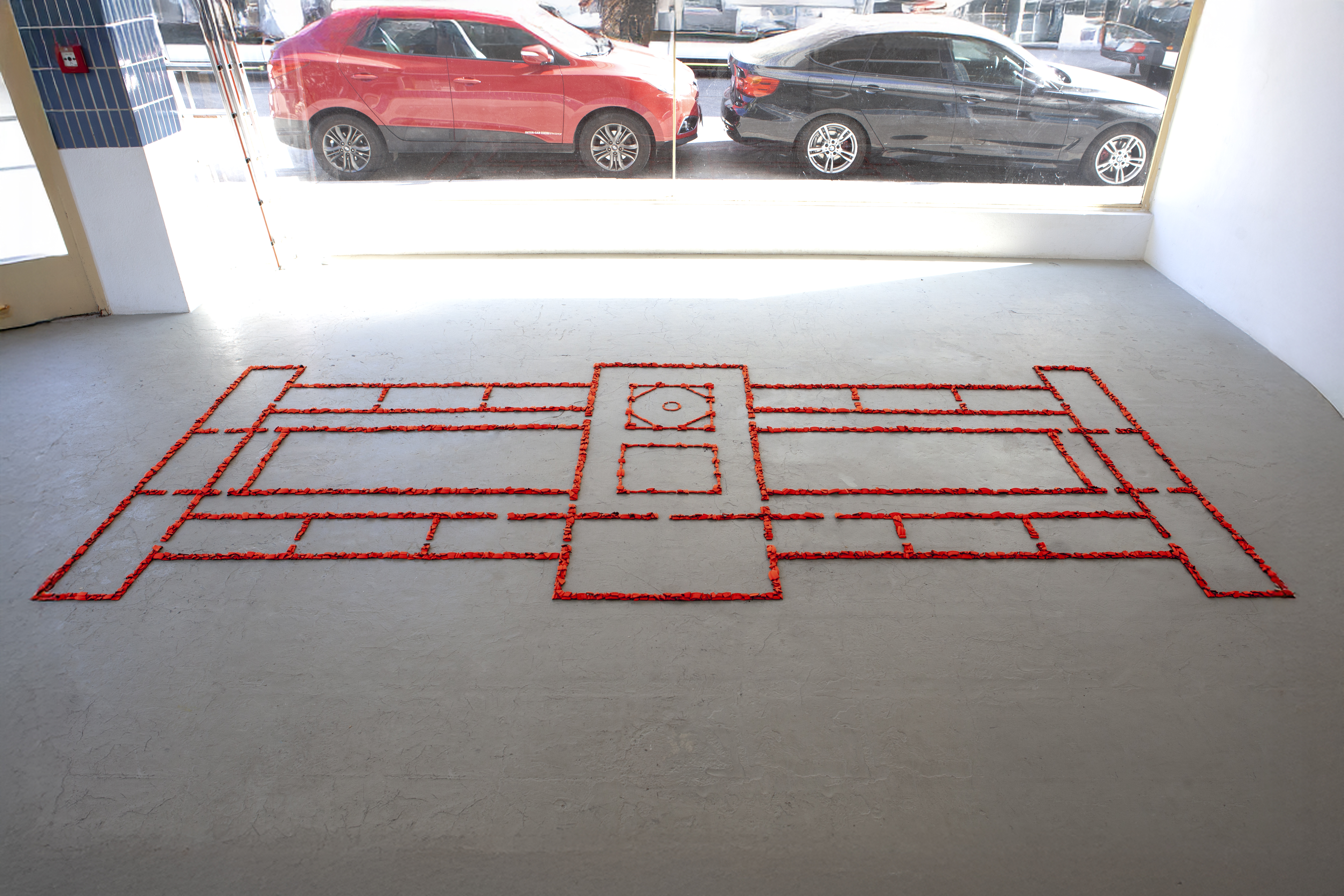
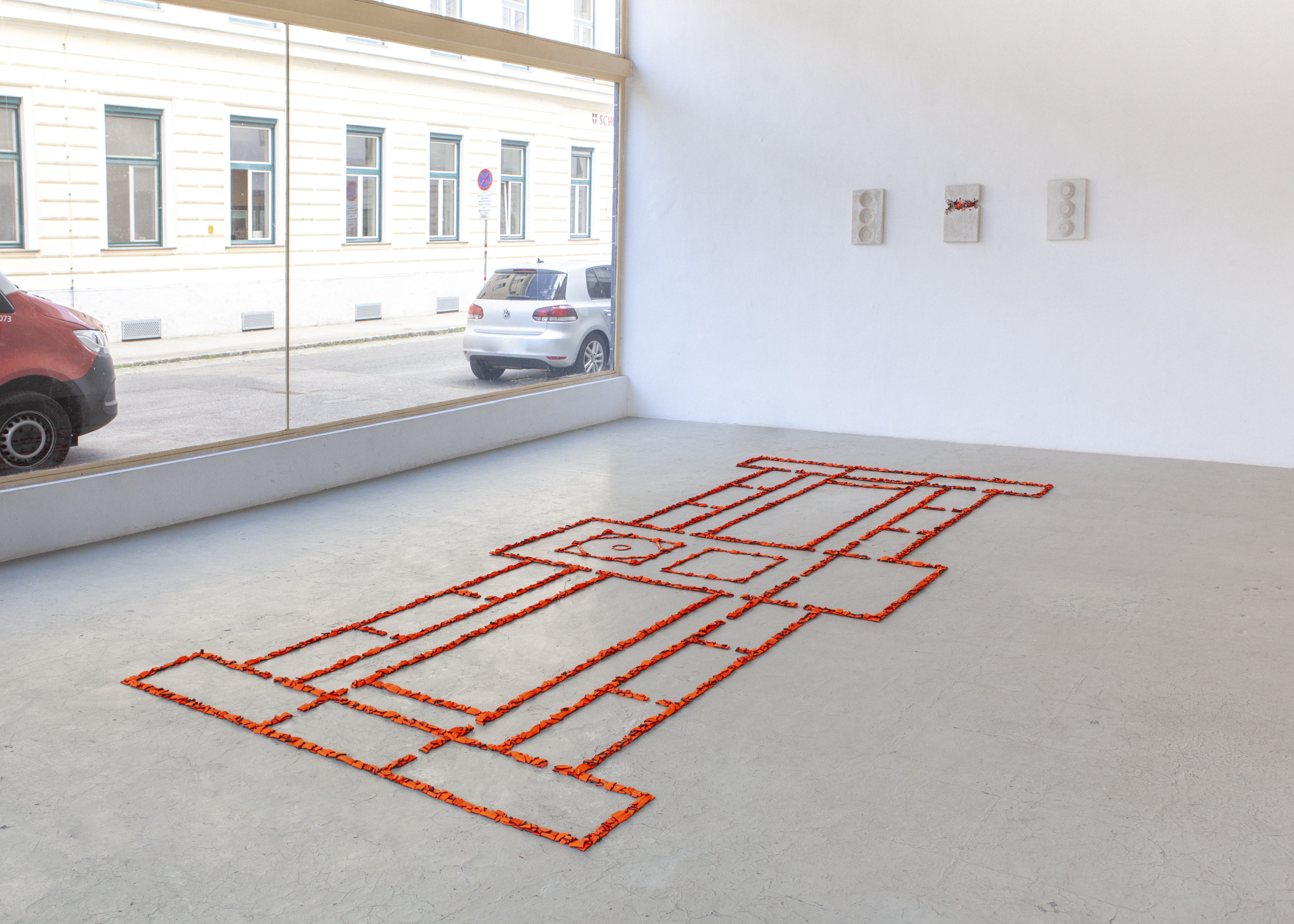
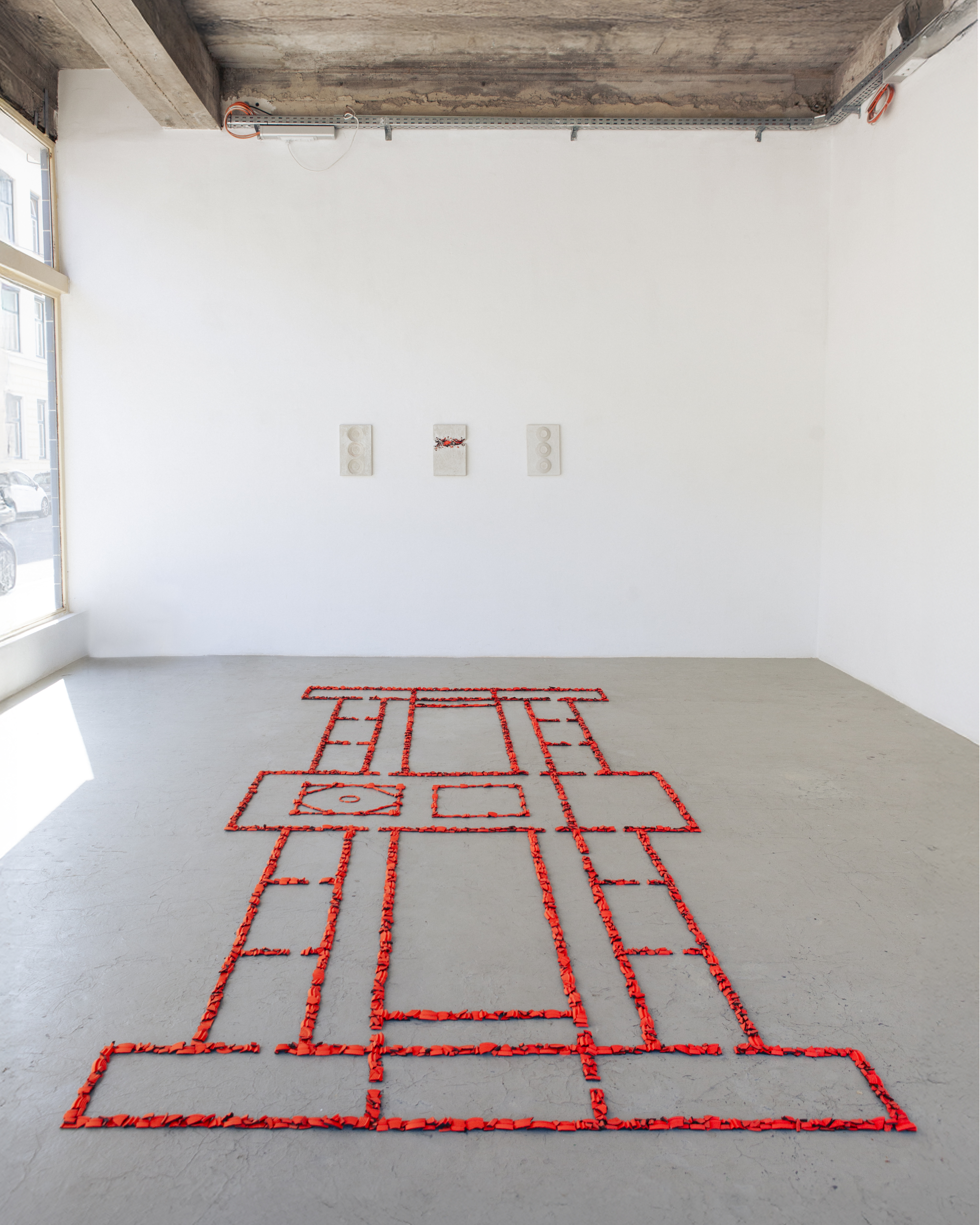
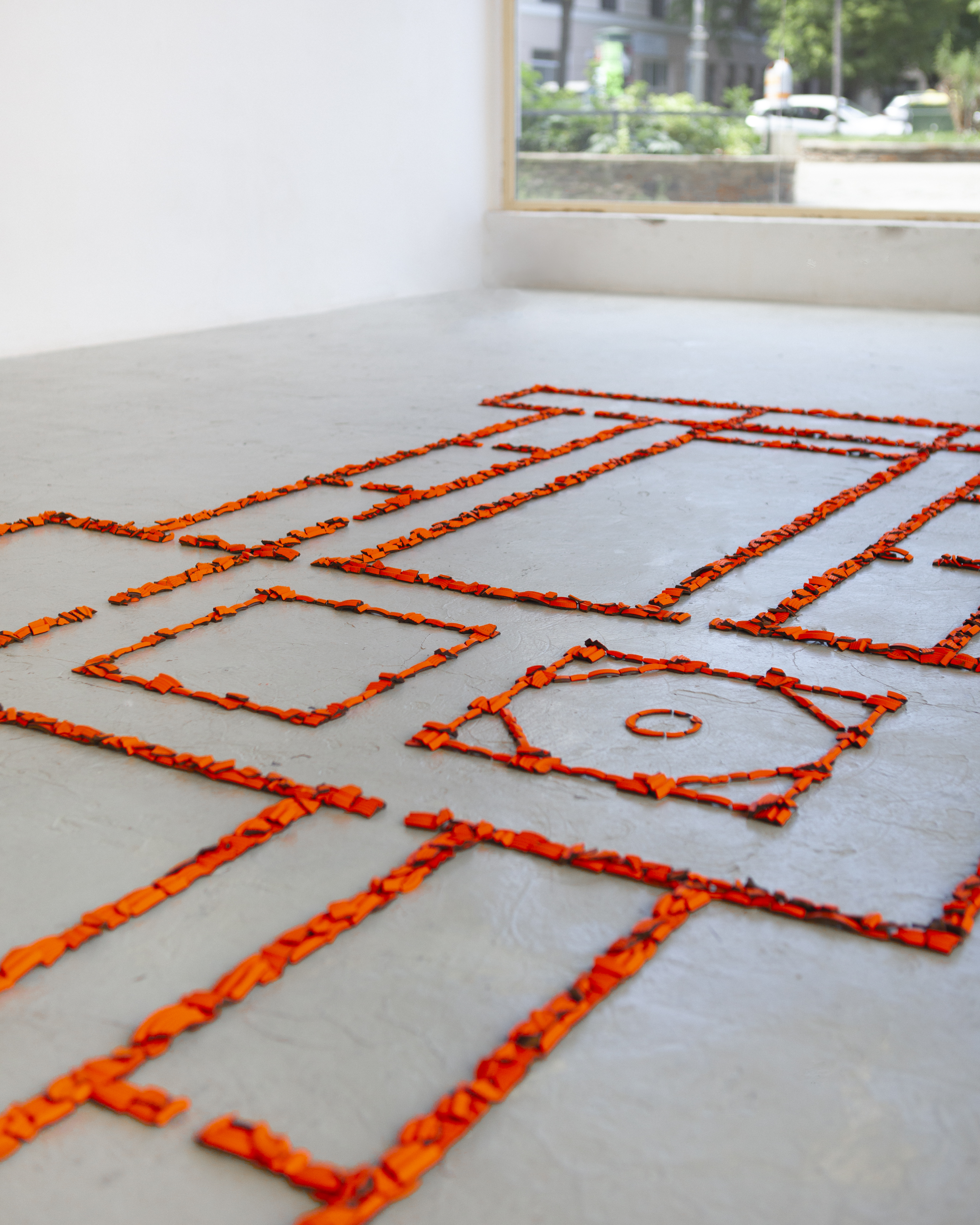
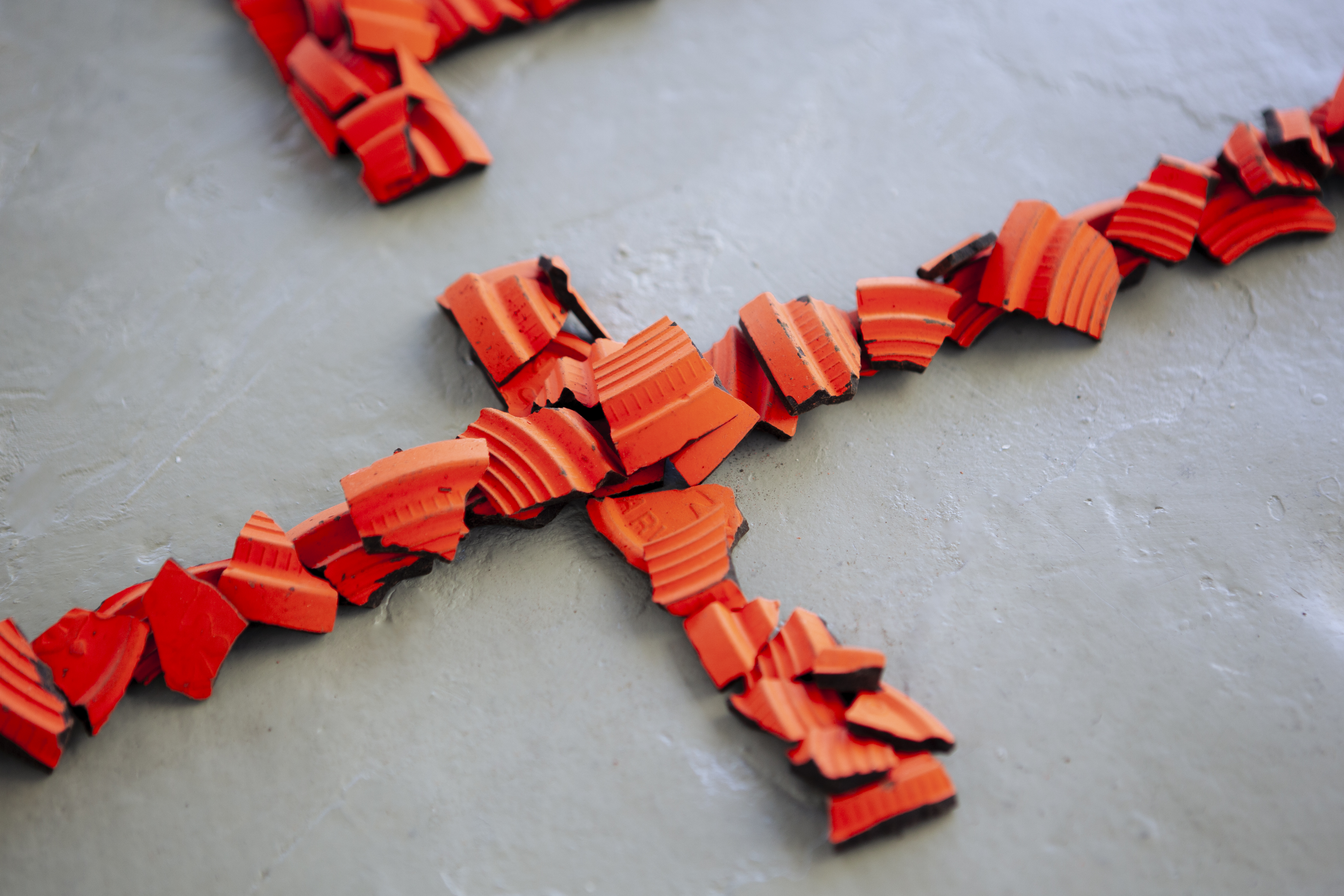
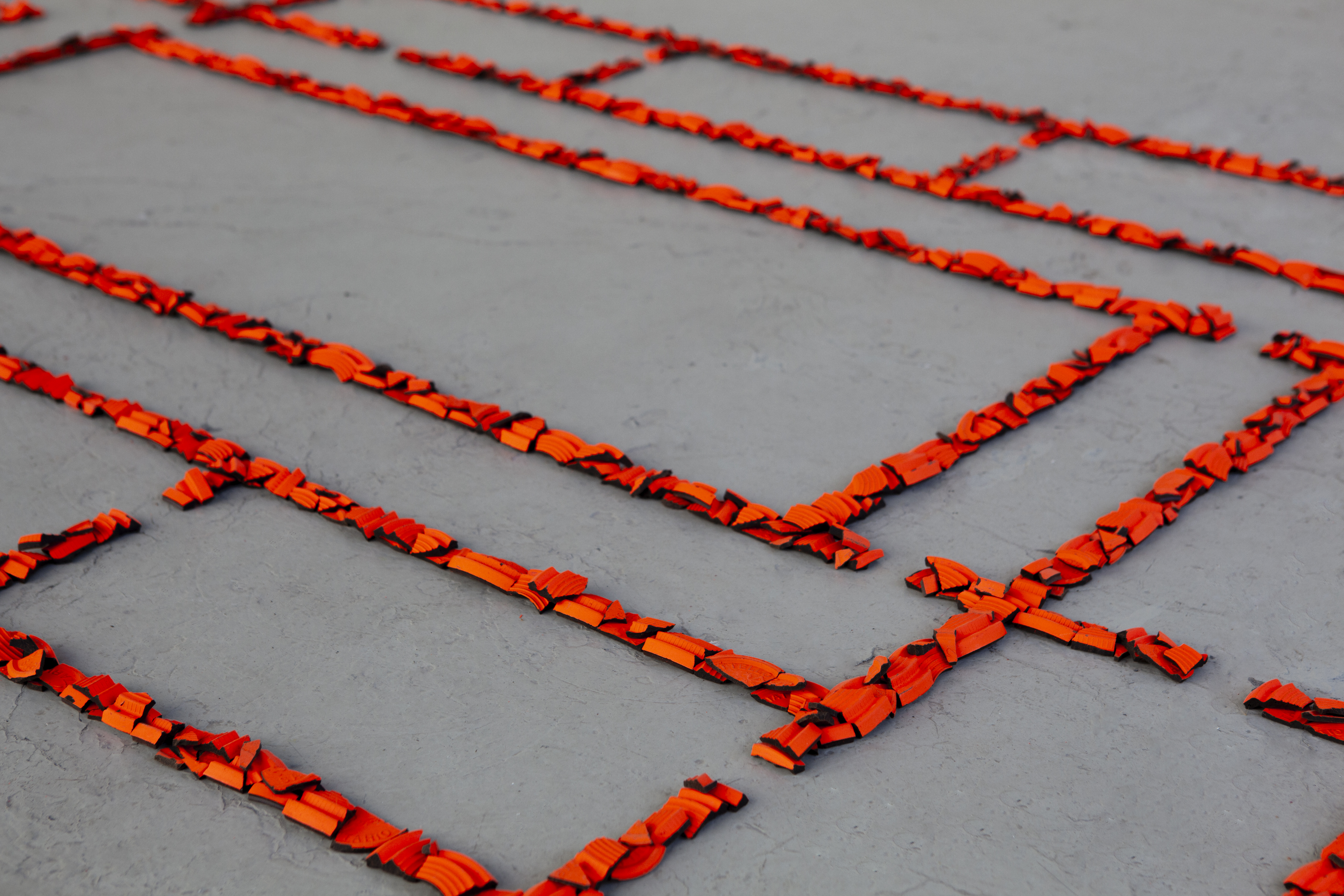
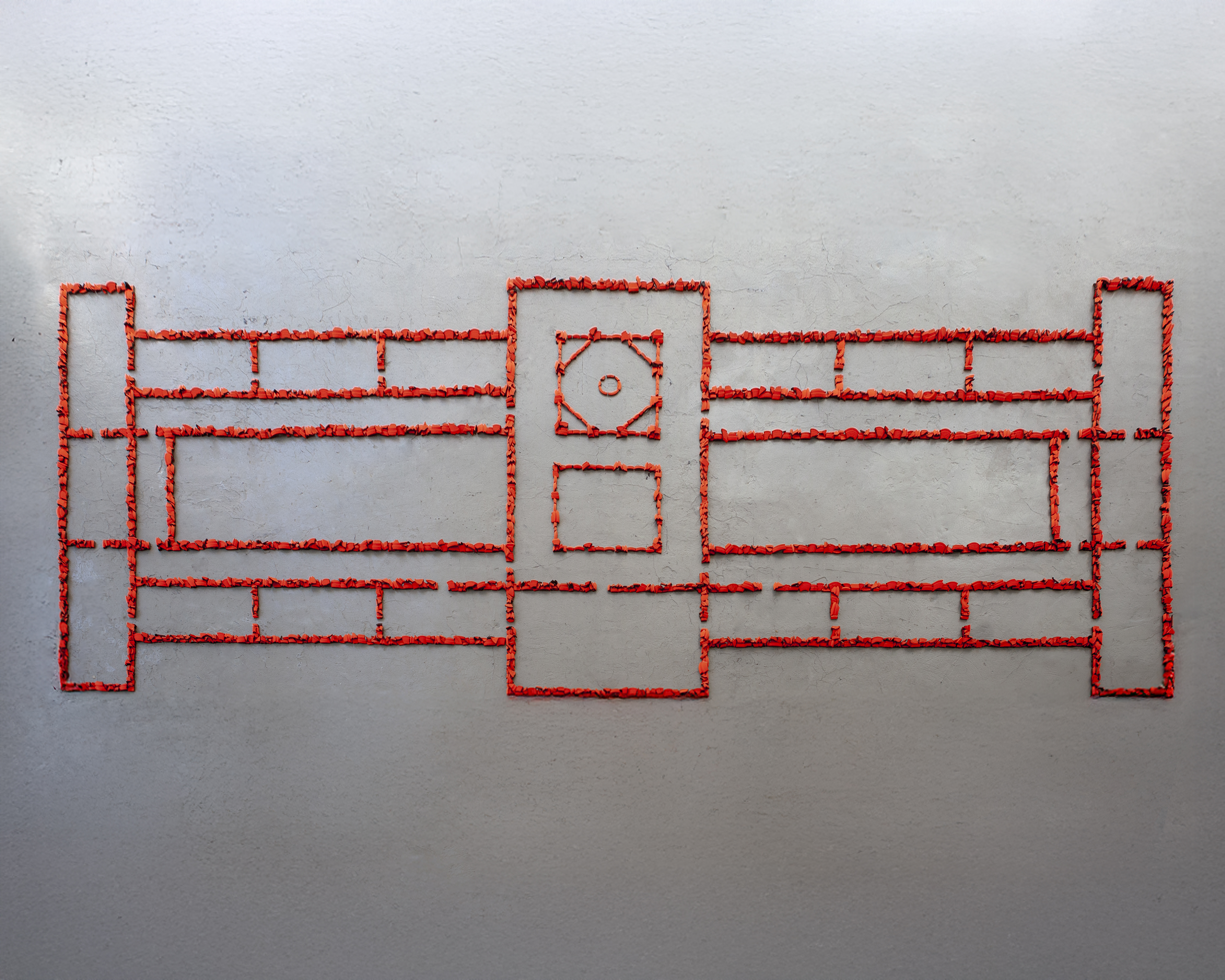
The floor installation reconstructs the floor plan of the Natural History Museum Vienna using fragments of clay pigeons designed to shatter upon impact from gunfire. Rather than treating these fragments as mere residue, the work approaches them as unstable materials that resist fixation, employing fragmentation both as a material condition and as a methodological approach.
By reassembling a material intended to be destroyed and discarded into the architectural structure of a museum, the work generates a tension between two opposing systems: destruction and preservation. While clay pigeons are consumable objects that fulfill their function only through breakage, the museum, by contrast, seeks to collect, classify, and preserve traces of life over time. The work does not simply put these systems side by side, but reveals their underlying interdependence.
While the reconstructed floor plan follows the symmetry and order of the museum’s architecture, it is composed of irregular and fragile fragments. Rather than forming a unified whole, these pieces introduce instability into a structure that typically represents permanence and authority. In this context, the fragment operates beyond its material condition, pointing to scientific classification and exhibition practices as constructed and mutable systems.
The work reveals how acts of conservation have historically been closely entangled with processes of extraction and destruction. By reconstructing an institutional space through materials marked by traces of violence, the installation questions the presumed neutrality of the museum and reframes preservation as a process shaped by selection, transformation, and ongoing change.
이 설치 작품은 총격에 의해 산산이 부서지도록 설계된 클레이 피전의 파편들을 사용해 비엔나 자연사박물관의 평면 구조를 재구성한다. 작업은 이러한 파편들을 단순한 잔해로 다루는 대신, 고정된 의미로 환원될 수 없는 불안정한 물질로 접근하며, 파편화를 물질적 상태이자 방법론적 접근으로 활용한다.
파괴되고 버려지도록 만들어진 물질을 박물관이라는 건축적 구조 안에 다시 배치함으로써, 이 작품은 파괴와 보존이라는 상반된 두 체계 사이의 긴장을 만들어낸다. 클레이 피전이 깨지는 순간에만 기능을 완수하는 소모적 대상이라면, 박물관은 반대로 생명의 흔적을 수집하고 분류하며 장기간 보존하는 제도적 공간이다. 작품은 이 두 체계를 단순히 병치하는 것이 아니라, 그 이면에 존재하는 상호의존적 관계를 드러낸다.
재구성된 평면 구조는 박물관 건축의 대칭성과 질서를 따르지만, 그 형태는 불규칙하고 깨지기 쉬운 파편들로 이루어져 있다. 이 조각들은 완결된 전체를 형성하기보다, 일반적으로 영속성과 권위를 상징하는 구조 안에 불안정성을 끌어들인다. 이러한 맥락에서 파편은 단순한 물질적 상태를 넘어, 과학적 분류 체계와 전시 제도 역시 구성된 것이며 변화 가능한 체계임을 가리킨다.
이 작품은 보존 행위가 역사적으로 채집, 추출, 그리고 파괴의 과정과 긴밀하게 얽혀 있었음을 드러낸다. 폭력의 흔적이 새겨진 물질을 통해 제도적 공간을 재구성함으로써, 설치는 박물관의 중립성이라는 전제를 질문하고, 보존을 선택과 변형, 그리고 지속적인 변화에 의해 형성되는 과정으로 다시 바라보게 한다.